
Beneath Hagia Sophia: The Hidden Tunnels Coming to Light
Guides in Istanbul have heard the stories for years: flooded passages, boats drifting in the dark, a secret corridor from Hagia Sophia to the palace. In November 2026, restoration teams finally showed what really lies beneath the great dome, and the truth is quieter, older and far more interesting.
What has been found
Survey work under Hagia Sophia began at the end of 2024, and a second phase started in December 2025. On 20 November 2026, Türkiye's Minister of Culture and Tourism, Mehmet Nuri Ersoy, went down into the galleries with the scientific committee, and the first images were shared with the public.
In the western garden, the team has identified nine tunnels and six underground spaces. Seven of the tunnels have been fully cleared, and together the cleaned passages run for about 420 metres. Close to 3,000 tonnes of fill, washed and dumped in over the centuries, has been removed from the western garden and the Vizier's Garden.
- The atrium beneath the garden: three of the underground spaces are thought to be the substructure of the church's great colonnaded forecourt, which no longer stands above ground.
- The longest tunnel: roughly 180 metres, running parallel to the main façade with a gentle slope of about three per cent. A possible link to a Roman-era street is being studied, but its original purpose has not yet been confirmed.
- Older than the dome: in the Vizier's Garden, excavators went about 1.5 metres below the muddy floor of an underground chamber of roughly 8 × 8 metres and reached layers believed to be older than the present building, which Emperor Justinian completed in 537.

Water, air and a building that had to breathe
Many of the passages seem to have been part of the monument's working infrastructure: carrying water, draining rainwater away from the foundations and keeping the building serviceable in a city that sits on an earthquake zone. In one tunnel heading south, water is still flowing today. Researchers are not yet sure whether it comes from groundwater or from the city's historic water distribution network.
Engineers are also studying whether the galleries could help ventilate the building again. For now, the vaults are being repaired with materials matched to the original, and some tunnels are being reinforced with stainless steel supports while every section is surveyed and documented.
Will visitors be able to go down?
Not yet. A presentation and exhibition plan is being prepared, but which sections might open, and when, has not been decided. The protection of the monument and the safety of visitors come first.
Until then, Istanbul already offers some extraordinary ways to experience the city below the city:
- Basilica Cistern – Justinian's forest of columns, with the famous Medusa heads
- Cistern of Philoxenos (Binbirdirek) – one of the oldest covered cisterns in the old city
- Hagia Sophia – the dome above it all, best seen early in the day
- Hippodrome – the old heart of Constantinople, just steps away
We will follow the work beneath Hagia Sophia closely and update our Istanbul programmes as soon as any part of the tunnels opens to visitors.
Planning a group or tailor-made programme in Istanbul? Our team will design the right route through the old city for your travellers.
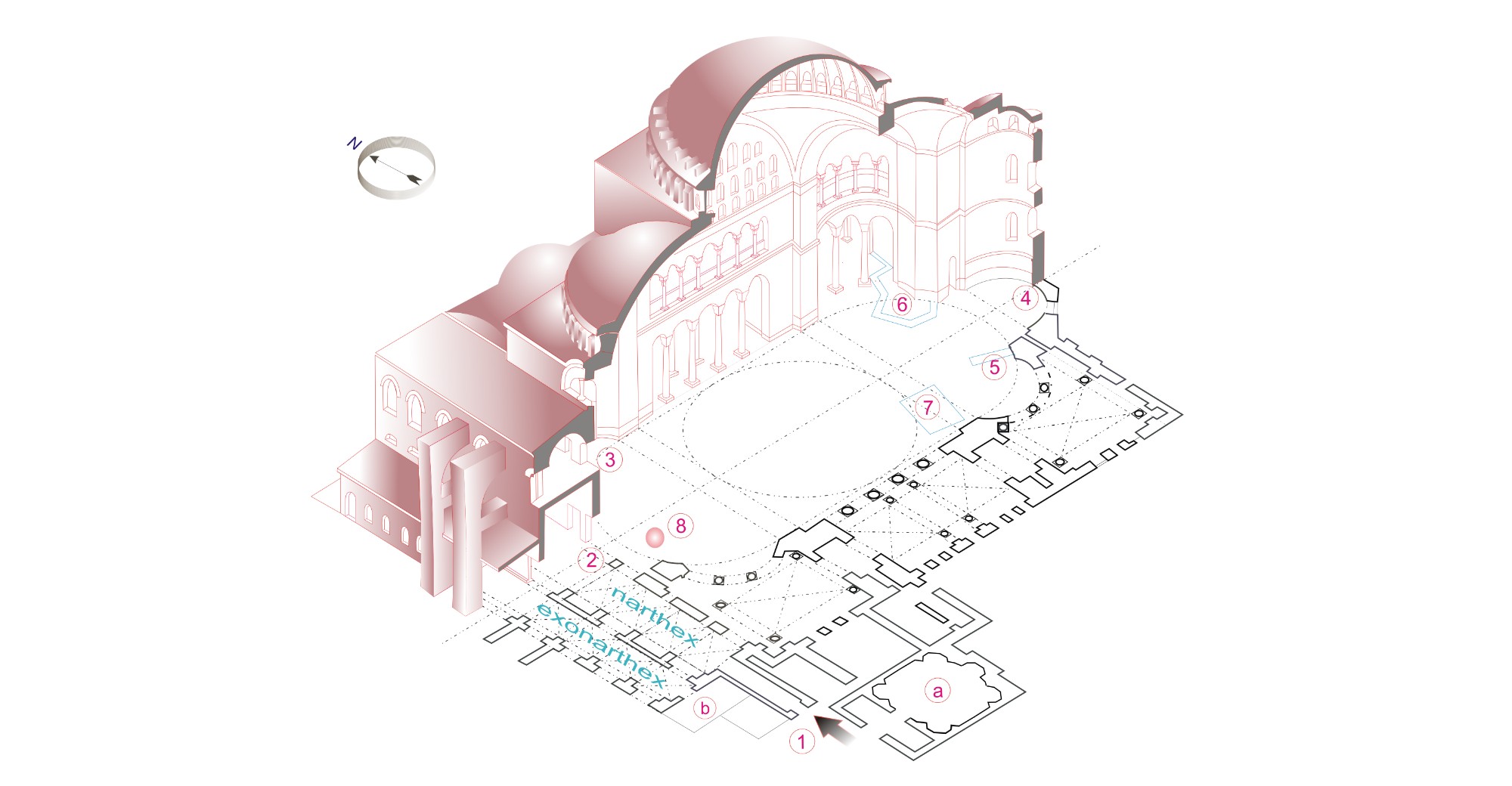
Discover Istanbul →Further reading: Beneath the Dome: Hagia Sophia's Hidden City Comes to Light by Zekeriya S. Şen. News source: Euronews. Cover illustration: Hagia Sophia section and ground plan by Ogodej, CC BY-SA 3.0, via Wikimedia Commons.